
Gated Community with 80% Open Space
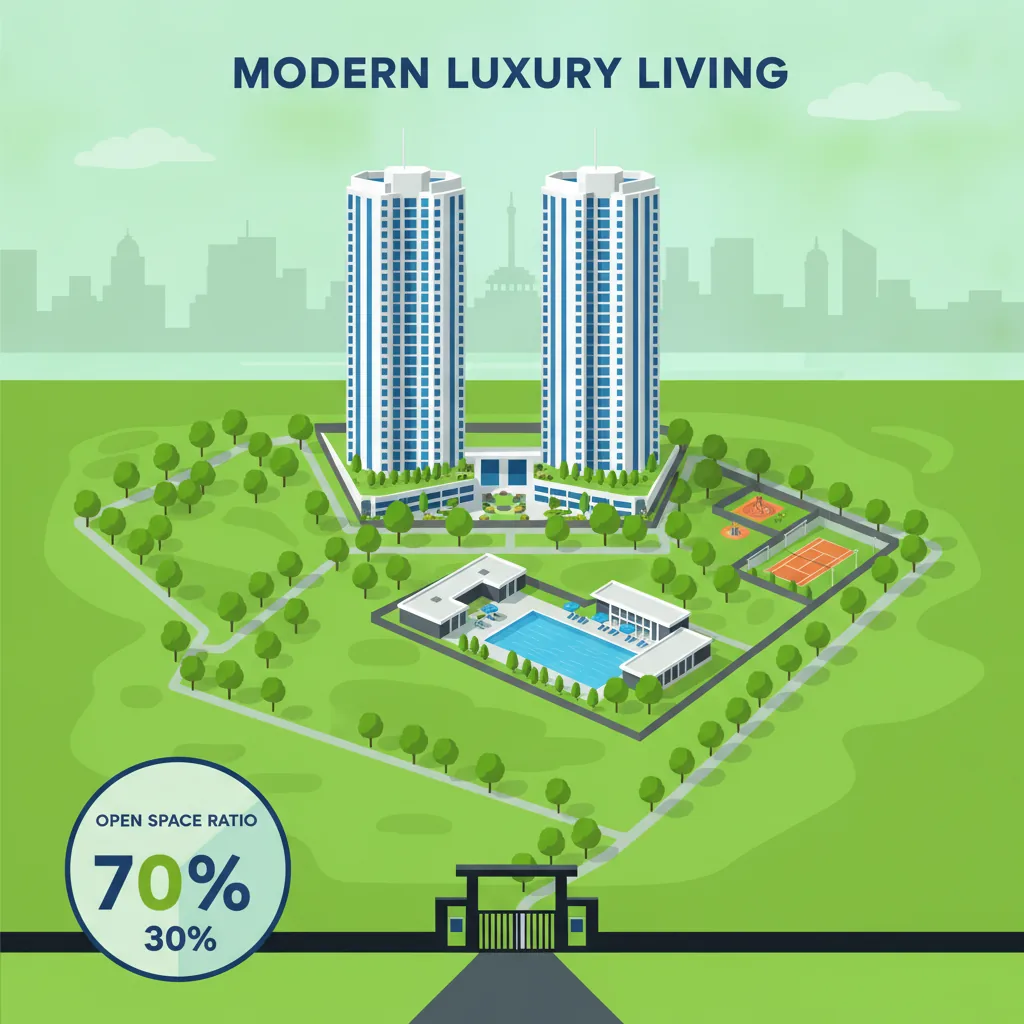
A gated community with 80% open space means a secure neighborhood where only 20% of the land is used for buildings, while the remaining 80% is left open for nature, parks, and amenities. In a fast-growing city like Hyderabad, choosing a home with this much open space is the best decision for your health and your property's future value.
A perfect example of this is Godrej Brooklyn Avenue in Kukatpally. This premium project features two grand 45-story towers built across a 7.8-acre campus, reserving 70% to 75% of the land entirely for beautiful gardens, walking paths, and outdoor family zones. By building upward instead of covering the ground with concrete, it ensures your home gets fresh air, plenty of sunlight, and a peaceful environment.
The Layout and Lifestyle Benefits
For smart homebuyers and families, a low-density neighborhood is much better than a crowded one. When a builder leaves up to 80% of the land unconstructed, it changes how you live every day. Instead of staring directly into a neighbor's window, your home opens up to beautiful views of green lawns and sports courts.
Why More Open Space Matters:
- Cooler Environments: Large green lawns and trees help lower the temperature inside the community by 2°C to 3°C compared to the hot, concrete streets outside.
- Cleaner Air: Dense trees and plants around the project act as natural filters that trap dust and provide fresh, clean air right at your doorstep.
- Better Privacy: Because the towers are built far apart from each other, families enjoy complete privacy without needing to keep their curtains closed all day.
A Closer Look at Godrej Brooklyn Avenue in Kukatpally
Finding a home with lots of open ground in a busy area like Kukatpally is very difficult. Godrej Brooklyn Avenue solves this problem by offering a modern, New York-themed layout that gives you the ultimate freedom of space.
By placing all the homes into just two iconic high-rise towers, the project leaves the ground free for over 50 amazing amenities. Residents can enjoy a massive 72,000 sq. ft. clubhouse, a 1.5-kilometer jogging track, safe play areas for children, and quiet parks for senior citizens—all protected by a smart, modern security system.
![]() Frequently Asked Questions
Frequently Asked Questions

It means that out of the total land owned by the developer, only 20% is used to construct physical buildings and concrete driveways. The other 80% of the ground is completely dedicated to open-to-sky features like parks, gardens, swimming pools, and sports courts.
Yes, communities with vast open grounds require more daily care. Typically, projects with high open spaces have a maintenance fee of ₹4.00 to ₹5.50 per sq. ft. each month. This money goes directly toward watering the gardens, professional landscaping, cleaning the pools, and maintaining outdoor play zones.
They do this by building vertically. Instead of constructing many short 5-story buildings that take up all the ground, developers build tall skyscrapers, like the 45-story towers at Godrej Brooklyn Avenue. Going higher reduces the footprint of the building on the ground, leaving massive areas free for greenery.
Under real estate rules, concrete driveways and visitor parking lots are included in the open area calculation, but they are called "non-green open spaces." Premium projects avoid this by moving all resident parking completely underground into multi-level basements so the ground level stays beautifully green.
Properties with lots of green open space see their prices grow much faster than crowded complexes. Because open space is hard to find in crowded city centers, these eco-friendly projects stay in high demand and command much better prices when you decide to sell or rent them out.
Yes, modern high-rise communities use advanced security to keep every corner safe. At Godrej Brooklyn Avenue, the large open lawns and walking tracks are monitored 24/7 by smart CCTV cameras, protected by security guards on patrol, and brightly lit by solar pathway lights.
Absolutely. Concrete buildings cause rainwater to wash away into city drains, but open ground absorbs rainwater naturally. These communities feature sub-surface rainwater harvesting systems that save water and recharge the local water table, keeping the project self-sufficient during dry summer months.